Tuesday, May 29, 2018

Strangers In The Land: Ger 011

Leviticus 16:29-31
“This shall be a statute forever for you: In the seventh month, on the tenth day of the month, you shall afflict your souls, and do no work at all, whether a native of your own country or a ger who dwells among you. For on that day the priest shall make atonement for you, to cleanse you, that you may be clean from all your sins before the Lord. It is a sabbath of solemn rest for you, and you shall afflict your souls. It is a statute forever."
What Does It Say?

Leviticus 16 deals with regulations for the Day of Atonement, perhaps the most sacred day in the Israeli religious calendar. This was the one day that the High Priest would enter into the Holy of Holies, the innermost chamber of the temple, in order to make sacrifice on behalf of the nation.

This day, the 10th day of the seventh month on the lunar calendar, was also a sabbath day regardless of what day of the week it fell. Unlike the other sabbath days, on the Day of Atonement the Israelis are commanded to "afflict [their] souls" in sorrow for the sins the High Priest is purifying them from.

It is also in this passage where we first see religious obligations being explicitly put on foreign nationals dwelling in the land. While Passover was extended to any ger who was willing to have their whole household circumcised and the Sabbaths were extended to all who were part of an Israeli household, observance of the Day of Atonement is required for every person in the land.

Unlike the Passover, it is not limited to the circumcised. It is required of any person who is in Israel. The verb translated as "dwells among" is guwr and includes the sense of temporary living conditions (Elijah guwr with the widow in 1 Kings 17, for example). So a ger who is guwr-ing in the area is a temporary resident.

So regardless what else the Bible says about foreign nationals, requiring respect for local religious festivals from non-believers is on the table.

Next: Leviticus 17

Monday, May 28, 2018

Strangers In The Land: Ger 010

Exodus 23:10-13

“Six years you shall sow your land and gather in its produce, but the seventh year you shall let it rest and lie fallow, that the poor of your people may eat; and what they leave, the beasts of the field may eat. In like manner you shall do with your vineyard and your olive grove. Six days you shall do your work, and on the seventh day you shall rest, that your ox and your donkey may rest, and the son of your female servant (amah) and the ger may be refreshed.
“And in all that I have said to you, be circumspect and make no mention of the name of other gods, nor let it be heard from your mouth."

What Does It Say?

Our next mention of ger is in the same chapter, this time in a list of Sabbath regulations. This Sabbath passage also gives a reason for resting, in this case, to give all of your property and workers a chance to be refreshed. The idea of the Sabbath is also extended to allowing your fields to lie fallow every seventh year, something which the Israelites evidently did not follow and which God brought judgement on them for (2 Chron. 36:20-21).

This passage shows us that there is concern for the ethical treatment of amah and ger in the Law. The Sabbath is not supposed to be about self-denial in the way that a fast is. We're supposed to stress out over a million details on what is and isn't allowed, and we're not supposed to lay motionless in the dark for 24 hours. It's a chance to be refreshed, and to give all those we are responsible for a chance to be refreshed and reinvigotated.

This is nothing groundbreaking in our understanding of ger, but it shows that their existence in Israel is assumed in the law before the children of Israel have even entered the promised land.

Next: Leviticus 16

Wednesday, May 23, 2018

Strangers In The Land: Ger 009


Exodus 23:1-9
“You shall not circulate a false report. Do not put your hand with the wicked to be an unrighteous witness. You shall not follow a crowd to do evil; nor shall you testify in a dispute so as to turn aside after many to pervert justice. You shall not show partiality to a poor man in his dispute.
“If you meet your enemy’s ox or his donkey going astray, you shall surely bring it back to him again. If you see the donkey of one who hates you lying under its burden, and you would refrain from helping it, you shall surely help him with it.
“You shall not pervert the judgment of your poor in his dispute. Keep yourself far from a false matter; do not kill the innocent and righteous. For I will not justify the wicked. And you shall take no bribe, for a bribe blinds the discerning and perverts the words of the righteous.
“Also you shall not oppress a ger, for you know the heart of a ger, because you were ger in the land of Egypt.


What Does It Say?

Exodus 23 also has list of miscellaneous commandments, but they are something of a mirror to Exodus 22. While Exodus 22 deals with not oppressing the poor, Exodus 23 instructs us not to oppress others on behalf of the poor.

There are two passages here the deal with this explicitly; "You shall not show partiality (hadar) to a poor man in his dispute" and  "You shall not pervert (natah) the judgment of your poor in his dispute." This ties in with the idea of being an honest witness and not perverting justice in the earlier verses.

The verb hadar means "to honor," so the idea is not to show undue consideration for the poor when rendering judgement. Don't show them favorable treatment due to their poverty, judge rightly. Natah means "to stretch," so the idea is not to stretch the case (we might say 'stretch the truth' or 'stretch the law') in order to render a favorable judgement for a poor man.
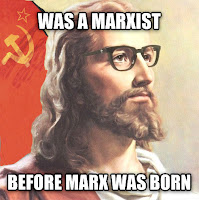
No. Just, no

There are many Bible verses that instruct us not to oppress the poor; indeed, there are many that instruct us to actively help them. And while it is a good thing to give of your own wealth to help the poor, some people try to make the Bible into a Marxist text, where the rich are always villains and the poor are always noble.

But we are forbidden to pervert justice in favor of the poor. We are not to rob the rich to help the poor. We are not to lie about the rich to help the poor. While in this world justice is often tipped in favor of the rich and powerful, in the West we're just as likely to unjustly punish the rich (or even the financially stable) just for being rich (or financially stable).

Justice is Justice, and it is the right of the poor, the rich, and everyone in between. It is owed to us as  individuals, not as social groups. And while that doesn't relate directly to ger, it does inform our treatment of them: do not to tip justice in favor of ger just because some of them are poor or vulnerable.

The verse dealing with the ger here is almost identical to the Exodus 22 passage, but it goes further. Exodus 22 is a bit "tit for tat" - don't oppress the ger because you were ger in Egypt. Exodus 23 takes it a step further: don't oppress the ger because you know the heart of the ger. You can sympathize, you know what it's like, you know that feel.

Ancient Israelis, comforting a ger in their midst.

In the Bible, God tends to repeat the stuff that's most important. That's part of the reason why we get four Gospels instead of one. So the fact that we get a second appearance of an almost identical commandment reinforces the importance of not oppressing the ger. Just don't do it. Even if we aren't supposed to oppress people in favor of the ger, treating them fairly shows our heart. It's a matter of our identity as people who know what it's like to be strangers in a strange land.

I'm going to preview some New Testament stuff here, but in a spiritual sense, the Church is the New Israel. We too know what it's like to be ger, strangers and wanderers in a world that hates us. We know the heart of the ger, and this should guide us in our treatment of ger.

Next: Exodus 23:10-13

Monday, May 21, 2018

Strangers In The Land: Ger 008

Exodus 22:21-27

“You shall neither mistreat a ger nor oppress him, for you were ger in the land of Egypt.

“You shall not afflict any widow or fatherless child. If you afflict them in any way, and they cry at all to Me, I will surely hear their cry; and My wrath will become hot, and I will kill you with the sword; your wives shall be widows, and your children fatherless.

“If you lend money to any of My people who are poor among you, you shall not be like a moneylender to him; you shall not charge him interest. If you ever take your neighbor’s garment as a pledge, you shall return it to him before the sun goes down. For that is his only covering, it is his garment for his skin. What will he sleep in? And it will be that when he cries to Me, I will hear, for I am gracious.


What Does It Say?

Today's ger passage comes in a list of miscellaneous laws that govern how the Israelites were to treat the weak and at-risk. Unlike many Old Testament commandments, these come with explicit reasons for why God gives them as laws. I've included the commandments on widows, orphans, and debtors so you can see the logic at work in those similar situations.

God says that the Israelites are not to mistreat or oppress ger, for they themselves know what it is like to be mistreated and oppressed ger. The word used here for 'mistreat,' yanah, can also be used to mean 'destroy' and has a sense of physical violence (although it is in some places translated as 'oppress', eg. Lev 25:14). The word translated as 'oppress,' lachats, can also mean to literally press (Num 22:25).

So we can understand this to mean that we are not to commit oppressive violence against outsiders. The picture is that of what Egypt did to Israel - to enslave, oppress, and physically harm (for example, by killing all the firstborn males).

Along with slavery and genocide, the
Egyptians were also known for their
offensive Halloween costumes
This passage shows us that ger are considered a protected class in Israel, presumably because they are so vulnerable. The lives of Abraham, Issac, Jacob, and their descendants are full of examples of their vulnerability as foreigners living in someone else's country.

Even under the old law, we are not supposed to take advantage of foreigners or treat them with oppressive violence of the sort Egypt treated the Israelis with.

Now, we might take a second to remember God is talking about actual violence and exploitation here. There is no concept of microaggressions or stare-rape here. If it's not on the same level as what the Egyptians did to the Israelis (enslaving and attempting to genocide an ethnic minority), then it's outside of the scope of the passage.

I'll leave the question of whether or not the modern state of Israel is violating this command in their treatment of the Palestinians as an exercise for the reader.

Next: Exodus 23

Friday, May 18, 2018

Strangers In The Land: Ger 007

Exodus 20:8-11
“Remember the Sabbath day, to keep it holy. Six days you shall labor and do all your work, but the seventh day is the Sabbath of the Lord your God. In it you shall do no work: you, nor your son, nor your daughter, nor your male servant (ebed), nor your female servant (amah), nor your cattle, nor your stranger (ger) who is within your gates. For in six days the Lord made the heavens and the earth, the sea, and all that is in them, and rested the seventh day. Therefore the Lord blessed the Sabbath day and hallowed it."

What Does It Say?

This passage is of course from the Ten Commandments and is the only commandment that deals with foreigners. In short, all who were in the land and attached to an Israeli household were required to keep the Sabbath. This extends not only to ebed (the kinda-sorta slaves) and any foreign nationals staying with an Israeli family, but also to any animals owned by the Israeli household.

Also, bear in mind that the "your"s in this passage are inferred - that is to say, they are added to the text to make it more readable in English. So what we read as:
"you, nor your son, nor your daughter, nor your ebed, nor your amah, nor your cattle, nor your ger who is within your gates"

Originally reads:
"son, daughter, ebed, amah, cattle, ger gate"
And if you're wondering why I left out "you" from the original, it's because the Hebrew word for "you" (את at, but it depends on gender/number) doesn't appear in the text. It's implies by the context, but Hebrew doesn't require an explicit subject here.

All of that is to say, the text would be ambiguous as to if this is your stranger or not. In my (still limited) opinion, it could refer to any ger in your gates (as we might say, under your roof), whether they are a member of your household. This sheds an interesting light on Jewish customs like the Shabbas Goy, the non-Jew hired to do simple tasks Jews are forbidden to do on the Sabbath.

Now, if you ask three Rabbis what type of work Shabbas Goy are allowed to do you'll get five answers, but in my conversations with observant Jews, Shabbas Goy are used for simple tasks like turning on light switches and so on.

At any rate, we meet our old friends ebed and ger in this passage, but we also find amah. Amah is basically a female version of ebed, a female kinda-sorta slave. For example, Sarah's slave Hagar is called amah in Genesis 21. There is, however, an idea that Israeli women can become amah, for example Exodus 21:7.

Again we see that non-Israelis who are part of an Israeli household are required to live by aspects of the Law, like previous passages requiring circumcision for ebed. This again leans against religious plurality as being sanctioned in Scripture. 

Wednesday, May 16, 2018

Strangers In The Land: Ger 006

Exodus 18:1-6

And Jethro, the priest of Midian, Moses’ father-in-law, heard of all that God had done for Moses and for Israel His people—that the Lordhad brought Israel out of Egypt. Then Jethro, Moses’ father-in-law, took Zipporah, Moses’ wife, after he had sent her back, with her two sons, of whom the name of one was Gershom (for he said, “I have been a stranger in a foreign land”) 4 and the name of the other was Eliezer (for he said, “The God of my father was my help, and delivered me from the sword of Pharaoh”); and Jethro, Moses’ father-in-law, came with his sons and his wife to Moses in the wilderness, where he was encamped at the mountain of God. Now he had said to Moses, “I, your father-in-law Jethro, am coming to you with your wife and her two sons with her.”

What Does It Say?

This passage takes place after Moses and the Israelites has left Egypt, passed through the Red Sea, and started on their journey to Canaan. On the way, Moses' father-in-law (who we already met in Ger 003) comes out to meet them and give Moses back his wife and kids.

Now Gershom's name is the only place where ger appears in this passage, but I decided to include it in our study for two reasons:

1). Sheer bloody-mindedness. We're doing every passage with ger, not 99% of passages with ger.

2). With all of the prohibitions against marrying pagans in the Old Testament, I wanted to show that there is no blanket prohibition on marrying non-Israelis. Exodus 18 doesn't say why Zipporah had returned to her father (most scholars speculate Moses sent her back due to the danger from Pharaoh, but the text never explicitly says why), but it does show us that all involved believed her place and her children's place was with their father.

It's important to remember this, along with other instances of inter-ethnic marriage, because there are passages that very violently condemn marrying foreign women. The difference is that the latter passages are condemning marrying foreign women because they bring their foreign gods with them. There are no passages in the Bible condemning marriage with converted non-Israelis. At least, there aren't any as far as I know, and if they do exist, we'll get to them eventually

Next: Exodus 20

Tuesday, May 15, 2018

Strangers In The Land: Ger 005

Exodus 12 Analysis

As we discussed last time, Exodus 12 gives us a variety of different types of non-Israelis. In this post, we're going to speculate on what this variety tells us about what the Bible says about immigration. Let's start by briefly reviewing the different Hebrew words used:

Ben - roughly, "outsider." In Exodus 12, it refers to 'those outside of Israel', but in other passages it can refer to those who are outside of a particular tribe. Basically, anyone who is not part of a given group is ben to those inside the group. Does not refer exclusively to those outside an ethnicity.

Ebed - a purchased human being whose role is between a servant and a slave. Considered part of a household and must be circumcised. Assumed to be non-Israeli.

Sakiyr - a hired servant who is paid wages. Not considered part of a household and does not have to be circumcised. Assumed to be non-Israeli.

Towshab - a temporary non-native resident. Not part of a household, not circumcised. Most sakiyr would also be towshab.

Ger - non-native residents. Ger who want to be circumcised can be circumcised and celebrate the Passover. Ger who do this will be under "one law" with the native-born.
This passage shows us the differences between the various types of non-Israelis in ancient Israel and is an important Rosetta stone for unlocking the meaning of future texts.

Exodus here assumes that there will be some number of non-Israelis living in the land. It assumes that some of them will be slaves and some will be workers paid a wage. It assumes some will be temporary residents who will return to their homelands and some point and that some will be long term residents. It assumes that some will adopt the religion and customs of the Jews and that some will not.

So we already so indications of the direction that the Bible is going to go on issues like immigration, migrant labor, freedom of religion (for non-natives working and living temporarily in the land), and naturalization. These ideas are here in seed form; we'll have to wait to see how they develop in the rest of Scripture.

Interestingly, there's nothing here that implies migrant laborers are bad or unacceptable. In fact, it's assumed that some number of them will be present in the new nation. Of course, it also assumes some level of human trafficking and that any slaves purchased will be forcibly circumcised and by extension forced to abide by Jewish religious law.

It implies that some ger will become fully naturalized citizens ("one law"), although it's a bit ambiguous at this point. We should wait and see how other verses treat the ger and if there's any evidence that circumcised ger are treated as second class citizens or otherwise unequal from ethnic Israelis.

One thing that it does not say is if towshab are allowed to practice their own religions (pray, make sacrifices, own idols) while living in Israel. I would assume the answer is 'no,' but I'm going to wait until we see a verse that specifically says that.

Next: Exodus 18